
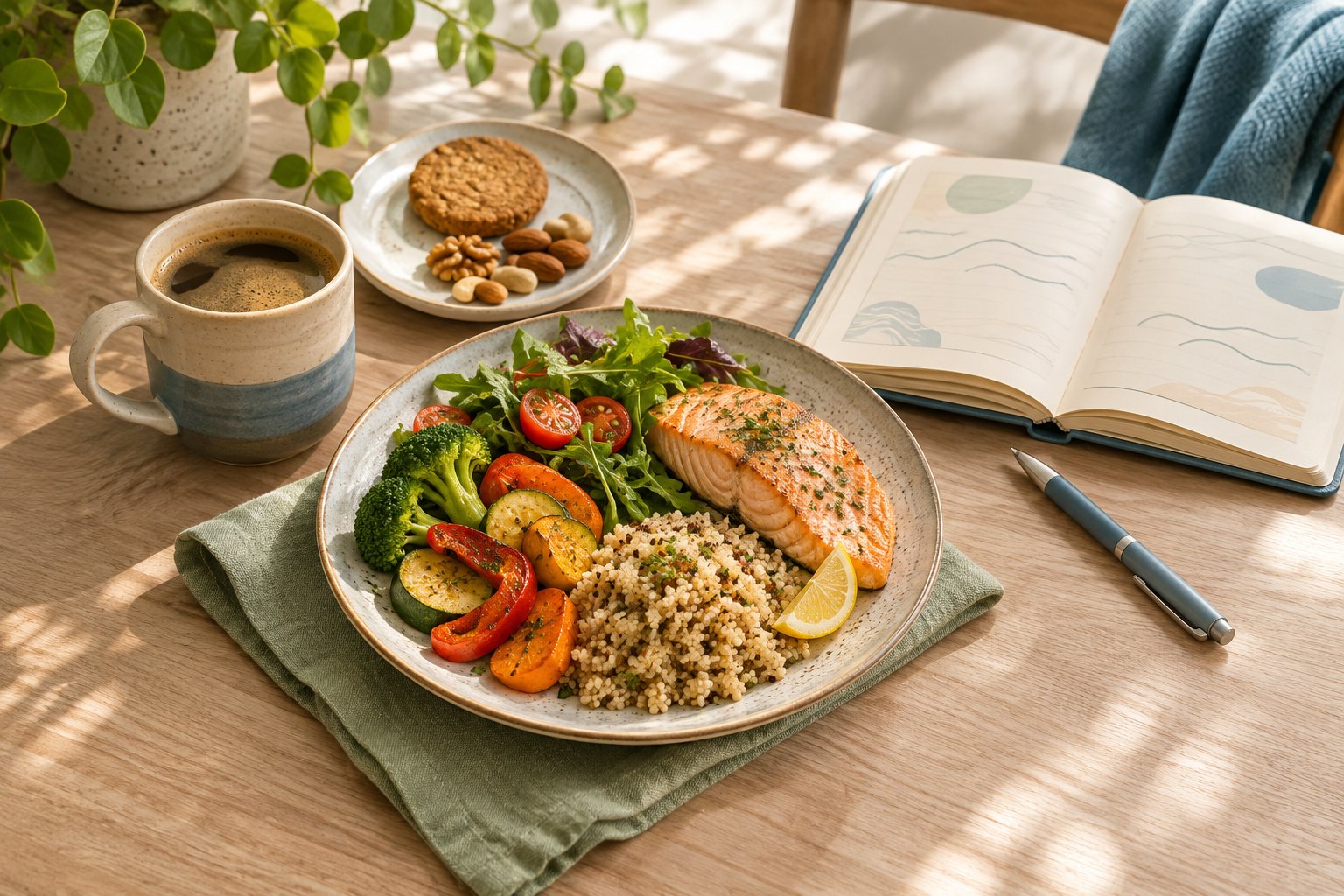
Start with everyday meals and approximate portions, then use your first month of records to understand habits and weight changes
A coffee on the way to work, a biscuit during a call, another handful of nuts while cooking: these moments rarely stand out when you recall the day. A food diary gives them a place beside breakfast, lunch and dinner. The useful question is not whether the day was perfect, but what actually happened and what you would like to adjust.
Start with a record you can keep up
Record the food, a rough portion and the time. A small bowl, two slices or half a package can be a starting description when you do not know the weight. Add drinks, sauces and extras rather than waiting for a perfectly measured day. Approximate entries show a pattern; they do not turn a calorie estimate into an exact measurement.
For example, you might notice that afternoon snacks appear on days when lunch happens late. That gives you a concrete experiment: prepare lunch earlier or choose a planned snack that fits your day. Write down the change so you can return to it. Several small, clear observations are easier to act on than a long list of foods to avoid.
What to review after a month
Dietary self-monitoring is used in weight-management programmes, and research has tested it alongside other support. It can help with weight loss, but a diary alone does not promise a particular change. Use a month as a review point: compare your own meals, snack patterns and dated weight entries, rather than expecting the same result as somebody else.
- Which drinks or snacks were easy to forget?
- Which meals fitted your schedule and kept you comfortable?
- What small change was realistic to continue?
- What would you like to ask a clinician or dietitian?
Keep the diary useful, not demanding
If you miss an entry, continue with the next meal. Mark an uncertain portion as approximate instead of inventing details. A diary is also useful when weight loss is not the priority: you can discuss meal timing, preferences or the practical effect of a prescribed eating plan. During pregnancy, recovery or treatment, agree on weight-related changes with your care team.
Quick answers
Do I need kitchen scales?
You can begin without them. Use a consistent rough description and refine entries when you have reliable information. Precise nutrition calculations need better portion information than a quick note can provide.
Does an unchanged weight mean the month was wasted?
No. You may have discovered a repeated pattern or found a manageable way to record meals. Bring that information to the next discussion instead of responding with increasingly strict restrictions.
How Olisora can help
Olisora’s food diary keeps food, calorie and nutrient estimates, weight and movement records together. Discuss the patterns you notice and the health information you choose to share. Premium adds personal meal plans with recipes and a shopping list, so the conversation can turn into a practical next meal.