
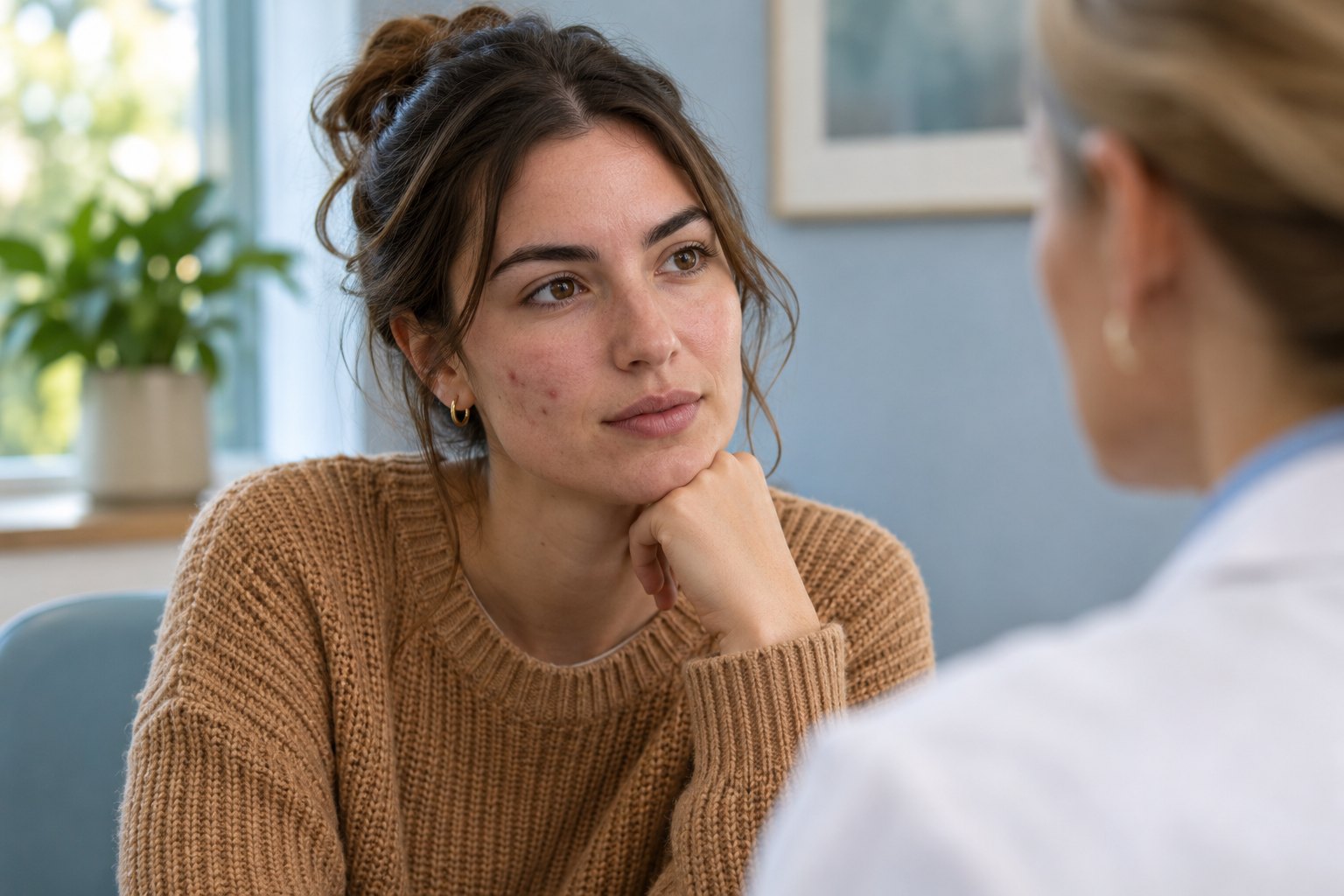
What to notice before treating a breakout, when to get help and which skin procedures have evidence for the problem you want to treat.
A cheek that breaks out after weeks of blackheads tells a different story from a cheek that suddenly itches after a new cream. Note what happened first, where it started and how long it lasted. These details help a clinician choose the next step.
Blackheads and inflamed spots
Blackheads or small skin-coloured bumps alongside pimples can point to acne. Benzoyl peroxide reduces acne-associated bacteria. Adapalene, a topical retinoid, helps prevent blocked pores. The American Academy of Dermatology (AAD) strongly recommends both for acne. Its recommendation for azelaic acid is conditional. It is worth discussing if spots leave dark marks. AAD acne treatment guidelines.
If prescribed benzoyl peroxide or adapalene, ask about starting on alternate days to limit irritation. Improvement may take 6–8 weeks. A treatment review is usually due at 12 weeks. Seek care sooner for deep, painful lumps or scarring. Avoid topical retinoids, including adapalene, during pregnancy or when planning a pregnancy. NICE guidance on acne.
When cheeks feel hot and water stings
Flushing across the centre of the face, burning and small bumps can occur with rosacea. Colour changes can be subtle on darker skin. Note how long the heat lasts and whether it follows something like a hot drink. See a clinician if it keeps returning. Eye pain, sensitivity to light or blurred vision calls for same-day medical care. NHS guide to rosacea and eye symptoms.
When a new product seems to be the trigger
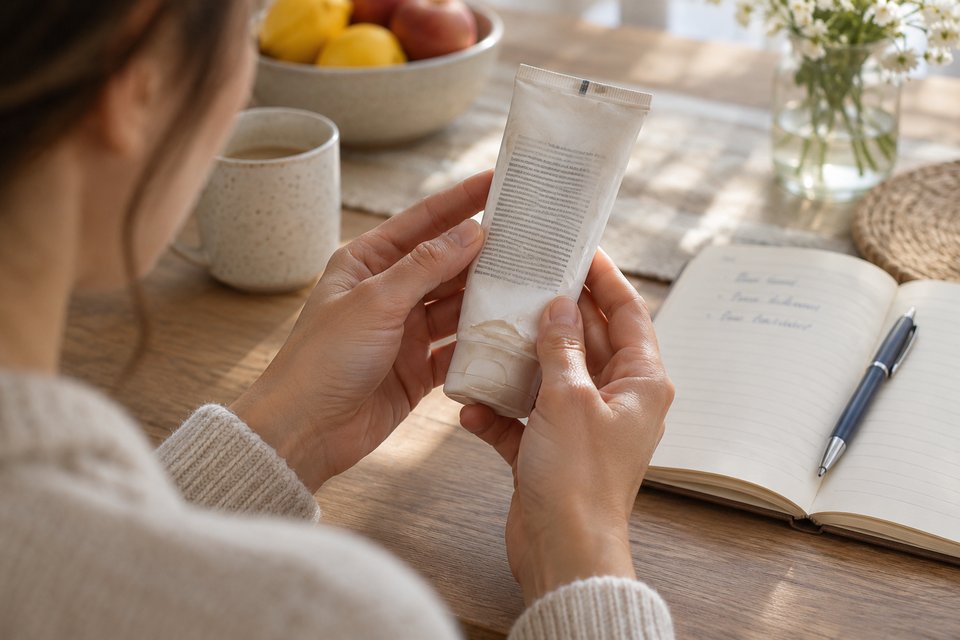
Gently wash it off and stop using it. Note where you applied it and how soon itching or swelling began. Take the ingredient list to a clinician if reactions are severe or keep recurring. A dermatologist may use patch testing to identify a contact allergen. AAD guide to reactions to skin care products.
Lasers, peels and tea tree oil
A vascular laser can reduce visible facial vessels in rosacea. Ask which vessels the clinician plans to treat, how many sessions to expect and how likely pigment changes are with your skin tone. Laser treatment for rosacea.
For active acne, the AAD found too little evidence to recommend chemical peels, laser or light devices, or microneedling. A few studies suggest tea tree oil may help, but confidence is limited and the oil can irritate skin. Discuss ongoing inflammation before paying for a series of procedures. AAD review of acne treatments. NCCIH evidence on tea tree oil.